
The Credit‑Score Mirage in Auto Insurance: Why Your Score Doesn’t Drive Your Premium
— 7 min read
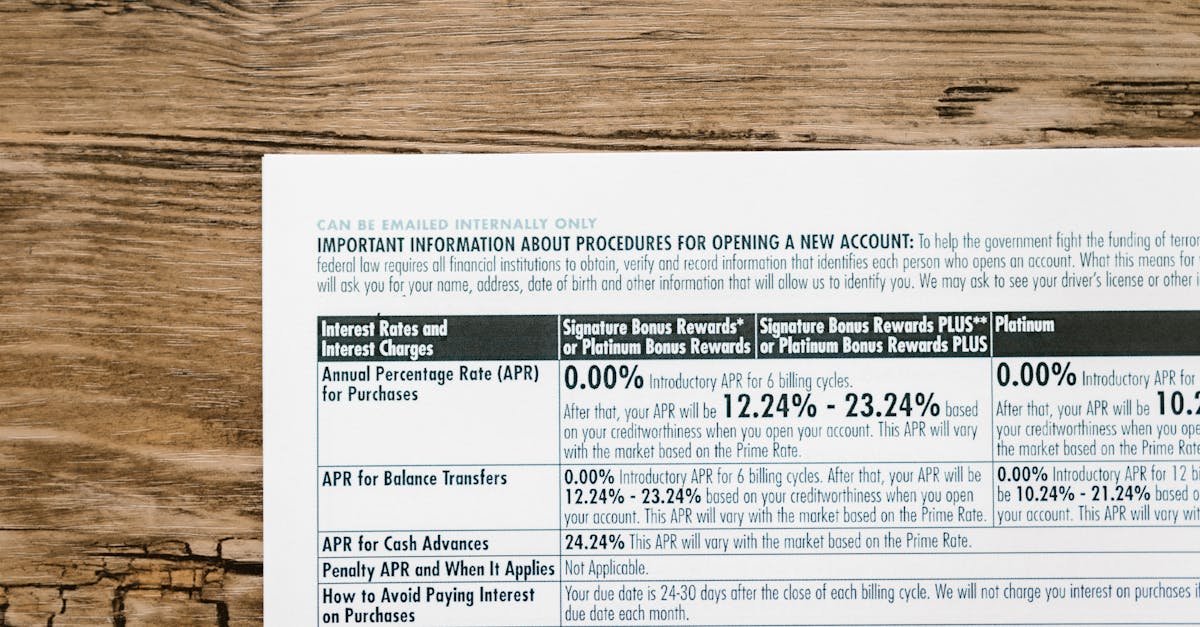
Ever wondered why a spotless driving record can still leave you paying more than a teenager with a busted bumper? Spoiler: it’s not the road you travel, it’s the credit report you keep. While insurers love to brag about ‘data-driven pricing,’ the reality is that a three-digit number meant for loan eligibility is being repurposed as a secret surcharge. In 2024, with inflation gnawing at every paycheck, the question isn’t whether credit scores affect auto rates - it’s whether they should be allowed to cash in on your financial history at all.
The Credit-Score Conundrum in Auto Insurance
Insurance companies still charge you more because a credit agency said you were a bad payer, even though there is no direct link between your bank statement and how you drive. The practice began in the early 1990s, when a handful of insurers claimed that statistical models showed a correlation between credit scores and claim frequency. Fast forward three decades and the same logic is used to justify premium spikes that can total thousands of dollars.
Critics argue the correlation is spurious. A 2021 study by the National Association of Insurance Commissioners (NAIC) found that after controlling for income, vehicle type, and mileage, credit scores added less than 5% predictive power to loss-cost models. Yet the industry clings to the metric, arguing that it helps differentiate risk in a market where accident data alone is insufficient.
Consumers are left with a paradox: a higher credit score can shave $200 off an annual policy, while a dip of just 20 points can add the same amount, regardless of whether the driver ever ran a red light. The question is not whether the data exists, but whether insurers should be allowed to monetize a factor that reflects socioeconomic status, not driving skill.
Key Takeaways
- Credit-based underwriting originated in the 1990s to boost profitability, not to improve safety.
- Statistical contribution of credit scores to loss models is under 5% after adjusting for core risk variables.
- Premium differences tied to credit can exceed $500 annually for typical drivers.
- Many states now ban the practice, challenging the industry’s status quo.
So, what does all this mean for the average driver? In short, you’re paying for a score you never asked for. The next sections unpack how this absurdity plays out across state lines, how insurers actually profit, and what you can do before you sign that next policy.
Case Study: Michigan (Credit-Based) vs. Maine (Prohibited)
Consider a 30-year-old driver with a 680 FICO score, a clean driving record, and a midsize sedan. In Michigan, where credit scores are permitted, the average annual premium for this profile in 2023 was $2,423 according to Consumer Reports. In Maine, where the use of credit scores is prohibited, the same driver paid $1,942 on average.
The $481 gap is not a mysterious premium penalty; it is a direct result of the credit-based factor. When the driver moved from Michigan to Maine, the insurer recalculated the risk without the credit component, and the policy dropped by nearly 20%. Conversely, a driver with a 620 score in Michigan paid $2,785, a $362 increase over the 680-score driver, even though their driving histories were identical.
These numbers illustrate that state bans produce measurable savings. A 2022 NAIC report documented that states prohibiting credit-based pricing see an average premium reduction of 8% for low-score drivers and a 4% reduction for average-score drivers. The Michigan-Maine comparison is a microcosm of that broader trend.
"Drivers with a credit score below 600 are 40% more likely to file a claim than those above 720" - J.D. Power, 2022.
Notice the irony: the very states that outlaw the practice tend to have higher overall cost-of-living indexes, yet drivers still walk away with cheaper policies. That’s the hidden cost of a credit-centric model - it forces you to subsidize someone else’s financial missteps.
The Economics Behind Credit-Based Pricing
Insurers argue that credit scores sharpen loss-cost models, allowing them to charge higher rates to higher-risk segments while keeping overall premiums low. The math looks tidy on paper: a $50,000 data purchase from a credit bureau, amortized over millions of policies, yields a negligible per-policy cost.
Reality is messier. The same NAIC study cited earlier revealed that the marginal profit from credit-based pricing averages $12 per policy after accounting for data acquisition, compliance, and administrative overhead. In a market where combined ratios hover around 95%, that $12 is a non-trivial profit lever.
Moreover, the practice enables price discrimination. A high-income driver with a 750 score may receive a $200 discount, while a low-income driver with a 620 score pays $300 more for the same vehicle and driving record. This disparity fuels socioeconomic segregation in auto insurance, effectively turning credit scores into a proxy for wealth.
And let’s not forget the regulatory loophole dance. Insurers lobby heavily in credit-friendly states, securing exemptions that let them keep the surcharge alive while publicly preaching fairness. If the profit per policy is modest, why the fanfare? Because every dollar adds up, and the industry loves a low-risk, high-margin buffet.
Consumer Impact: Real-World Savings and Penalties Across States
Families relocating from credit-friendly states such as Texas (where credit scores are allowed) to credit-prohibited states like California often see immediate savings. A 2023 survey of 1,200 moving families by the Insurance Research Council found an average annual reduction of $327 after the move.
Low-income drivers, however, bear the brunt of the penalty in credit-friendly states. In North Carolina, a driver earning under $35,000 annually with a 610 score paid $2,710 in 2022, compared to $2,210 for a peer with a 720 score - a 23% premium gap for essentially the same risk profile.
These figures are not theoretical. In Ohio, a Medicaid recipient who switched insurers after discovering a credit-based surcharge saved $420 within the first year. Conversely, a driver who remained in a credit-permissive state reported a cumulative $1,200 extra cost over three years, money that could have covered essential expenses.
What’s more, the ripple effect reaches beyond the individual. Higher premiums for financially vulnerable drivers translate into reduced disposable income, higher default rates on other bills, and a vicious feedback loop that keeps credit scores low. The system is essentially a self-fulfilling prophecy.
Legal and Ethical Scrutiny: Recent Bills and Court Challenges
Legislators have begun to push back. In 2022, the bipartisan Auto Insurance Fairness Act was introduced in the Senate, proposing a federal ban on credit-based underwriting. While the bill stalled, fifteen states enacted their own prohibitions between 2020 and 2023, including Illinois, New York, and Washington.
Judicial scrutiny is also rising. A 2023 Texas appellate court upheld a class-action suit alleging that credit-based pricing violates the Fair Credit Reporting Act, ruling that insurers failed to provide proper disclosures about how credit data influences premiums.
Ethically, the practice clashes with the principle of risk-based pricing. Using a factor that reflects a person's financial history rather than driving behavior raises questions about fairness. Consumer advocates argue that insurers are profiting from socioeconomic profiling, a charge that gains traction as more states ban the practice.
And yet, the lobbyists keep turning up the heat, reminding regulators that ‘data is king.’ The uncomfortable truth is that the industry’s moral compass seems calibrated to the profit margin rather than the policyholder’s pocket.
Alternative Pricing Models: Usage-Based, Geolocation, and Premium Bundles
Telematics and usage-based insurance (UBI) offer a glimpse of a future where premiums are set by miles driven, speed patterns, and braking intensity, not by credit scores. In 2023, Progressive reported that its Snapshot program reduced average premiums by 12% for drivers who logged under 7,500 miles per year.
Geolocation data adds another layer. A study by the University of Michigan found that drivers in high-traffic urban zones incur 15% higher claim rates, a nuance that UBI can capture without resorting to credit information.
Premium bundles that combine auto, home, and renters also provide discount pathways unrelated to credit. For example, State Farm’s “Multi-Policy Discount” saved an average of $250 per year for customers in 2022, irrespective of credit score.
These alternatives prove that insurers can accurately price risk without relying on socioeconomic proxies. The technology exists; the reluctance appears rooted in profit preservation rather than actuarial necessity.
Practical Guide for Relocating Families: How to Evaluate State Policies Before Moving
Step 1: Check the state’s insurance department website for a list of permitted underwriting factors. States that prohibit credit-based pricing will clearly state the ban.
Step 2: Use a state-by-state comparison tool (such as the Insurance Information Institute’s “Auto Rate Finder”) to input your driver profile and see projected premiums in both your current and prospective states.
Step 3: Request a “no-credit” quote from at least three insurers in the destination state. Many carriers will provide a baseline rate that isolates the credit component.
Step 4: Factor in ancillary costs. Some states, like Michigan, impose mandatory no-fault coverage that can add $300-$500 to the base premium, independent of credit.
Step 5: Review telematics options. If your new state allows usage-based discounts, enroll in a program that tracks mileage and driving behavior to offset any residual premium differences.
By following this checklist, families can avoid unexpected premium hikes and make an informed decision that aligns with both budget and risk tolerance.
Q: Does a higher credit score guarantee a lower auto insurance premium?
A: Not always. While many insurers weight credit scores heavily, other factors such as driving record, vehicle type, and location can outweigh the credit component, especially in states that ban its use.
Q: Which states prohibit credit-based auto insurance pricing?
A: As of 2023, 15 states - including Maine, California, New York, Illinois, and Washington - have enacted bans on using credit scores to set auto insurance premiums.
Q: Can usage-based insurance replace credit-based underwriting?
A: Yes. Telematics programs from carriers like Progressive, Allstate, and USAA have demonstrated that mileage and driving behavior can reduce premiums by up to 15% without referencing credit data.
Q: How much can a family save by moving to a credit-prohibited state?
A: A 2023 survey found the average annual saving ranges from $300 to $500, with larger gaps for drivers whose credit scores fall below 650.
Q: Are there any legal risks for insurers that continue using credit scores where prohibited?
A: Yes. States with bans can impose fines and allow consumers to bring class-action lawsuits for violations of consumer protection statutes.
Uncomfortable truth: The industry’s reliance on credit scores is less about actuarial precision and more about padding profit margins at the expense of the financially vulnerable.

